Meat grinders
How to Choose an Industrial Meat Grinder
Choosing a meat grinder involves more than matching a daily production figure. The raw material, feeding method and next processing stage all shape the equipment you need.
Define the raw material and finished product first
Before requesting a quotation, describe what will enter the machine: fresh meat, pre-broken frozen meat or frozen blocks. Include piece dimensions, incoming product conditions and the required mince structure. This lets you compare machines against an actual production brief rather than motor power alone.
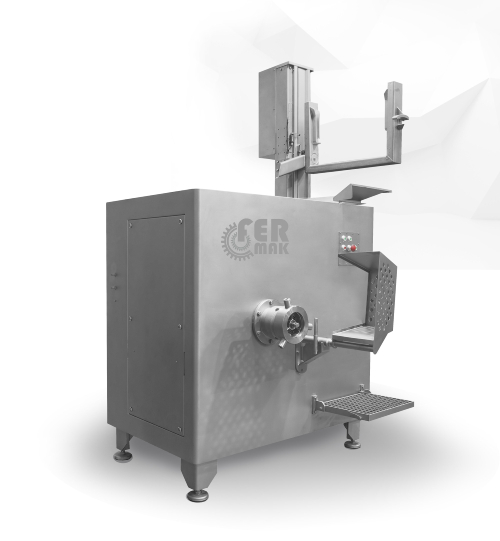
Within the FERMAK range, the 250 model is offered for frozen meat that has been broken into pieces before loading, while the 300 model processes frozen blocks. This distinction matters when planning preparation equipment and the feeding arrangement. Review accepted block dimensions and operating conditions in the relevant model information.
Assess capacity across the complete workflow
Ask which product and cutting configuration the stated hourly capacity refers to. If your shift includes different recipes or plate sizes, compare performance under those conditions. Allow for loading, product changes, discharge and scheduled cleaning when building the production plan.
If grinding is followed by mixing, consider the mixer batch size alongside grinder output. A high throughput at one stage does not by itself remove a queue at the next. Comparing equipment against the required output of the complete line gives you a more useful basis for selection.
Review the auger, knife and plate as a system
In a meat grinder, the auger moves meat towards the cutting assembly, where the knife and perforated plate work together. This operating principle is described in the FAO meat processing guide. Ask the quotation to identify the auger arrangement, cutting assembly and supplied accessories separately.
Request a trial using a representative product. Look beyond the appearance of the mince: observe continuity of feeding, the resulting product structure and transfer to the next machine. Record the trial conditions so that alternative machines can be assessed using the same criteria.
Make room for installation and daily operation
In addition to the machine footprint, identify the space required for a loading trolley, collection container and maintenance access. Handling and storing removable parts should also be included in the layout. Discuss utility requirements, operator training and a maintenance plan before commissioning.
A practical quotation checklist
- Meat type, incoming conditions and piece dimensions.
- Target hourly output, shift pattern and mince structure.
- Feeding method and downstream equipment capacity.
- Installation space, utilities and required cutting accessories.
With these details prepared, you can compare FERMAK meat grinder models and discuss how the selected equipment will fit your production line.