Bowl cutters
What Is a Bowl Cutter? A Selection Guide
A bowl cutter helps prepare the product structure required by a meat processing recipe. Selecting one starts with defining its role within the production line.
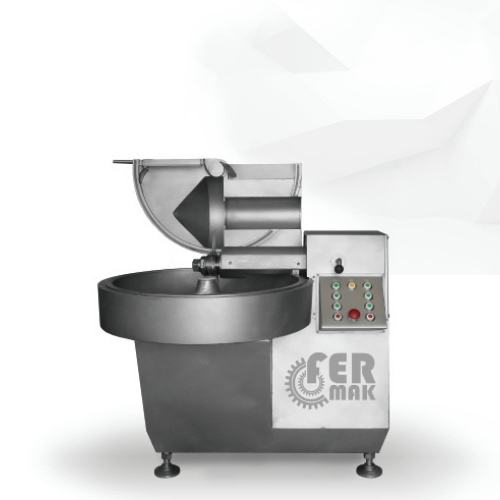
How does a bowl cutter work?
A bowl cutter chops and mixes product using a rotating bowl and a knife assembly. This differs from a grinder, which moves meat towards a perforated plate using an auger. Both operating principles are described in the FAO meat processing guide.
A grinder and a bowl cutter can serve different stages of a production line. The required equipment depends on the starting structure of the raw material and the result sought by the recipe. Bring your current processing sequence and a target product sample to the discussion, alongside the machine category you are considering.
Assess bowl volume and batch quantity separately
Do not equate a bowl volume stated in litres directly with the same number of kilograms of product. Ask the manufacturer to confirm the working batch quantity for your mixture and operating conditions. Include your smallest and largest batches as well as the daily production target.
The number of recipes processed during a shift should be considered alongside loading and discharge arrangements. Before choosing a large bowl, discuss whether the machine can also process your smallest planned batch appropriately. This keeps the capacity decision from depending solely on the busiest production day.
Connect blade and bowl settings to your recipe
FERMAK bowl cutter product information includes adjustable blade and bowl speeds and recipe-based operation. Review how these settings are managed, which parameters the operator can access and how recipes are changed. Confirm the equipment included with the particular model you select.
During a trial, record the processing sequence that produces the required structure instead of focusing on one speed setting. Recording raw material quantities, addition steps and operating settings together helps you compare equivalent conditions later. Define the checks needed for your recipe with your quality team.
Include loading and discharge in the production plan
Prepare a simple flow showing which container or trolley delivers the product and where it goes after processing. If a loading aid, discharge system or connection is required, specify it clearly in the quotation scope. Do not assume that the same equipment is included at every capacity.
Review access around the machine, the operator's working position and the arrangement needed for cleaning. Considering operating and maintenance instructions during selection helps you prepare a more realistic facility layout.
Information to prepare before selecting a bowl cutter
- Product type, target texture and current processing sequence.
- Smallest and largest batch quantities.
- Required controls and recipe-management features.
- Loading, discharge and installation-space dimensions.
Use this brief alongside the technical information on the FERMAK bowl cutter page to discuss a configuration suited to your production requirements.